
Understanding Bank Statement Generators
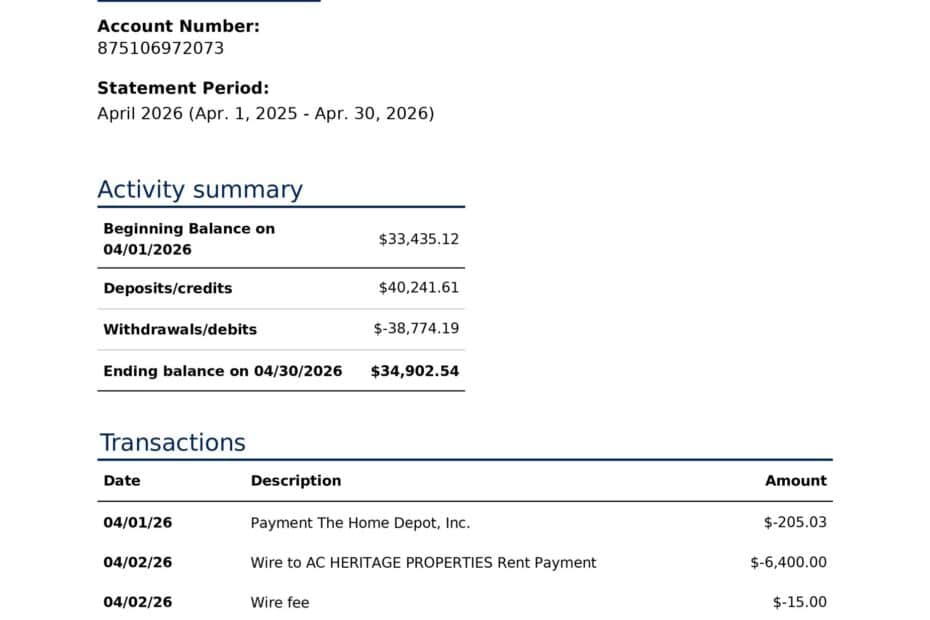
Bank statements serve as official records of your financial activities, documenting transactions, balances, and account details over a specific period. A 3-month bank statement generator is a specialized tool that creates realistic replicas of these documents covering a quarterly timeframe. These generators produce documents that mirror the format, structure, and content of actual bank statements but are fundamentally different from official statements issued by financial institutions.
These financial document tools work by allowing users to input custom transaction data, account information, and date ranges to create personalized bank statement templates. The resulting documents contain familiar elements like account numbers, transaction histories, and beginning/ending balances, making them visually similar to authentic bank statements.
From my experience evaluating these tools, the best generators maintain a clear distinction between generated documents and official bank-issued statements, typically including watermarks or disclaimers identifying them as templates or samples rather than authentic financial statements.
What Makes a 3-Month Statement Special
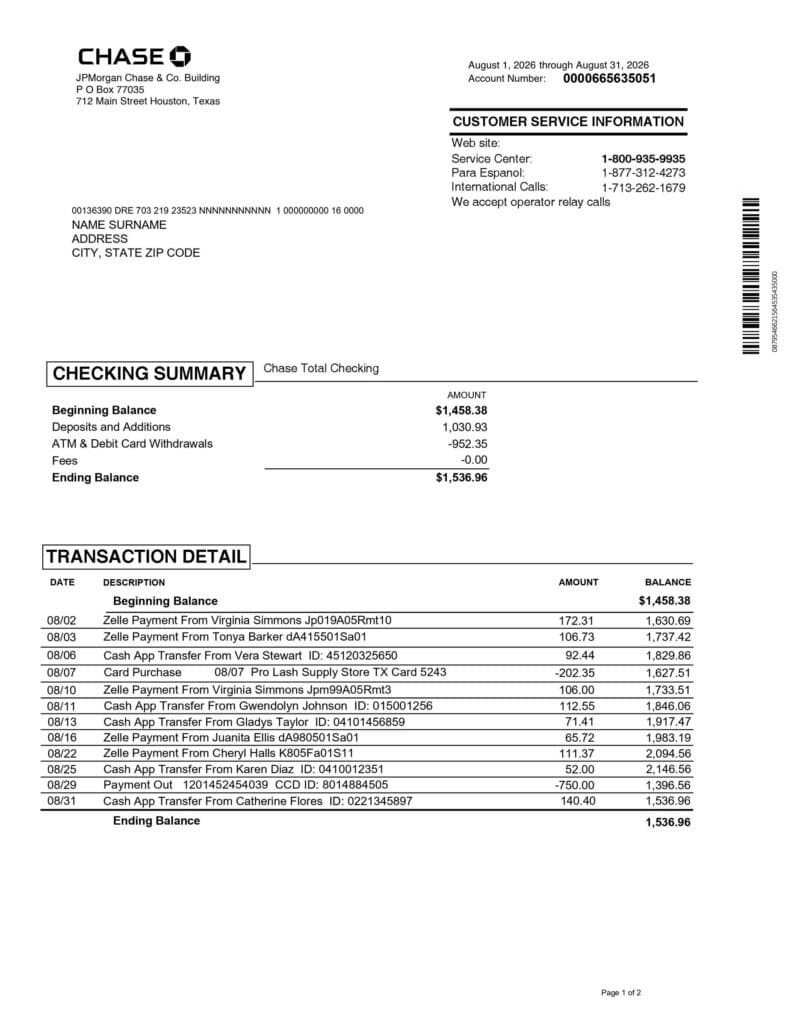
The 3-month timeframe holds particular significance in financial documentation. This quarterly period strikes an optimal balance between providing enough transaction history to establish patterns while remaining concise enough for practical review. Many lending institutions specifically request 3-month bank statements during loan application processes to verify income stability and assess spending habits.
In my work with financial verification systems, I’ve found that 3-month periods have become standard for several key purposes:
- Rental applications (showing consistent income)
- Loan pre-qualification (demonstrating financial behavior)
- Income verification for freelancers (establishing earnings patterns)
- Educational demonstrations (teaching financial literacy)
This timeframe provides enough financial transactions to show meaningful patterns without overwhelming reviewers with excessive data.
Types of Transactions Included in Generated Bank Statements
A realistic generated bank statement includes diverse financial transactions that mirror actual banking activity. These typically encompass deposits (direct deposits, check deposits, transfers), withdrawals (ATM, cash, transfers), payments (bill payments, debit card purchases), and various fees or adjustments.
| Transaction Type | How It Appears | Example |
|---|---|---|
| Direct Deposit | ACH CREDIT | ACH CREDIT – COMPANY PAYROLL |
| Debit Card Purchase | POS PURCHASE | POS PURCHASE – GROCERY STORE 06/15 |
| ATM Withdrawal | ATM WITHDRAWAL | ATM WITHDRAWAL – MAIN ST 06/17 |
| Bank Fee | SERVICE FEE | MONTHLY MAINTENANCE FEE |
When creating statement templates, I recommend including a realistic mix of recurring transactions (like rent or mortgage payments) alongside variable expenses (such as groceries or dining) to reflect authentic financial behavior. This approach ensures the generated document maintains credibility for legitimate educational or testing purposes.
Legitimate Uses for Generate Bank Statements Online
While the capability to generate bank statements online raises ethical questions, several legitimate applications exist. These tools primarily serve educational and professional purposes, supporting financial literacy initiatives and software development rather than misrepresentation. Understanding these proper applications helps maintain ethical boundaries when working with generated documents.
Business Applications
In my consulting work, I’ve seen businesses use 3-month bank statement generators for several legitimate purposes:
- Software Development – Testing financial applications with realistic but non-sensitive data
- UI/UX Design – Creating mockups for financial dashboard interfaces
- Staff Training – Developing materials to teach employees how to review financial documents
- Integration Testing – Verifying how accounting software processes bank statement imports
- Product Demonstrations – Showcasing financial product features with sample data
These business applications benefit from the ability to customize bank details within generated statements while maintaining the structural integrity and professional appearance of actual financial documents. This flexibility enables comprehensive testing and training without exposing sensitive customer information.
Educational and Testing Purposes
Generated bank statements serve as valuable teaching tools for financial literacy programs. When developing educational curricula, I’ve found that realistic sample statements help students learn to:
- Reconcile accounts and track spending
- Identify different transaction types
- Calculate interest and fees
- Spot potential fraud or errors
These educational resources provide hands-on experience with financial documents without requiring students to share their personal banking information. The 3-month format offers enough transaction history to create meaningful patterns while remaining manageable for classroom exercises.
Legal and Ethical Considerations
Using a 3-month bank statement generator comes with significant legal and ethical responsibilities. The key distinction lies in intent and representation: generating sample documents for education differs fundamentally from creating statements to deceive others.
- DO: Create statements for educational purposes, software testing, or design mockups
- DO: Clearly mark generated documents as samples or templates
- DO: Use for teaching financial literacy or statement analysis
- DON’T: Submit generated statements for loan applications or credit verification
- DON’T: Use to misrepresent financial status to landlords or businesses
- DON’T: Remove or alter watermarks identifying documents as templates
Presenting generated documents as authentic bank statements in official contexts constitutes fraud and may result in severe legal consequences. In my professional practice, I’ve maintained strict ethical standards by ensuring all sample documents are clearly labeled and never used for verification purposes.
Best Practices for Using Generated Statements
Based on my experience with 3-month bank statement generators, I recommend these professional guidelines for creating and using generated documents:
- Always include clear sample/template labeling – Watermark or header text identifying the non-official nature of the document
- Maintain realistic formatting – Match typical bank statement layouts with appropriate sections for account information, transaction history, and summary data
- Use appropriate transaction codes – Include authentic transaction descriptors and codes that match real banking systems
- Save in secure PDF format – Protect sensitive information even in sample documents with password protection
- Delete after use – Remove generated statements when the educational or testing purpose is complete
Following these practices ensures generated statements serve their legitimate purpose while minimizing risks of misuse. When saving documents, the PDF output option provides the most professional appearance and maintains formatting integrity across different viewing platforms.
Frequently Asked Questions
- What is a 3-month bank statement generator and how does it work?
A 3-month bank statement generator is a tool that creates realistic-looking bank statements covering a quarterly period. It works by allowing you to input account information and transactions, then formatting this data into a document resembling an official bank statement. - Is it legal to use a 3-month bank statement generator for loan applications?
No. Using generated statements for loan applications is fraudulent and illegal. Generated documents should only be used for educational purposes, software testing, or design mockups, and must be clearly labeled as non-official samples. - How realistic are the generated statements?
Quality generators produce documents that look visually similar to actual bank statements, with proper formatting, transaction codes, and summary sections. However, they should always contain markings identifying them as non-official templates or samples. - What should be included in a 3-month generated bank statement?
A comprehensive generated statement should include account information, opening/closing balances, transaction history with dates and descriptions, running balances, and summary sections. For realism, include regular deposits, various payment types, and occasional fees. - How to save generated statements as PDF?
Most bank statement generators offer a direct PDF export option. Otherwise, you can print the generated document to a PDF using your computer’s print function (selecting “Save as PDF” instead of a physical printer) to preserve formatting. - What are the legitimate uses for a 3-month bank statement generator?
Legitimate uses include financial education, software testing, UI/UX design, staff training on document review, and creating mockups for presentations or applications without exposing real financial data. - Can I customize bank details in a generated statement?
Yes. Quality generators allow customization of bank logos, account numbers, transaction descriptions, and balance information. This flexibility supports educational scenarios and software testing environments that require realistic but non-sensitive data. - How secure are online bank statement generators?
Security varies by provider. Use generators that offer encrypted connections and don’t store your data. For sensitive work, consider offline tools or those with clear privacy policies protecting any information you enter. - What types of transactions are included in generated bank statements?
Generated statements typically include direct deposits, debit card purchases, ATM withdrawals, checks, transfers between accounts, automatic payments, and bank fees. The best templates allow for both recurring and variable transactions to create realistic financial patterns.